


Understanding Glowing Eggs: Insights for Breeders and Enthusiasts
- conecuhcreekquail
- May 19
- 3 min read
Updated: Jun 1
The Mystery Behind Glowing Eggs
One of the most common messages breeders receive after customers candle shipped eggs is:
“Some of my eggs are glowing… They aren’t fertile.”
A “glowing” egg appears bright or almost transparent when candled with a light source. Instead of showing visible veins, shadows, or embryo development, the entire egg seems to light up or “glow” from end to end.
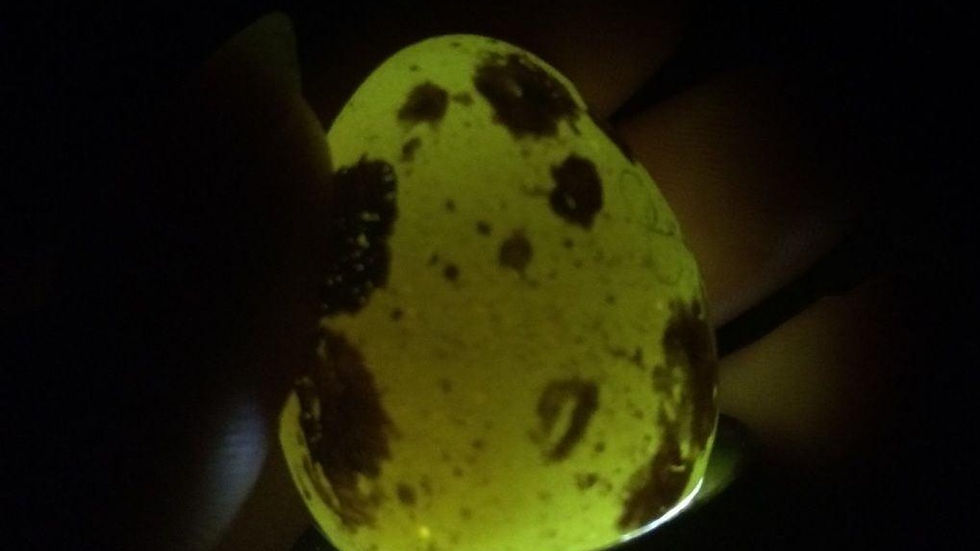
As breeders, we understand the frustration that comes with opening an incubator and not seeing the development you hoped for. However, the truth is that a glowing egg does not always mean the egg was infertile—especially when shipping is involved.
Factors Affecting Hatch Results
There are many factors between the breeder’s pen and your incubator that can affect hatch results and early embryo development. Understanding these factors can help explain why shipped eggs sometimes fail to develop, even when fertility rates at the breeder’s farm are strong.
Fertility and Hatchability Are Not the Same Thing
This is one of the biggest misunderstandings in the hatching world. An egg can be:
Fertilized
Properly collected
Correctly packaged
Shipped quickly
…and still fail to hatch. Fertility simply means the egg was fertilized before it was laid. Hatchability depends on whether that tiny embryo survives incubation and continues developing after the stress of shipping and handling.
Shipping Is Hard on Hatching Eggs
Once eggs leave a breeder’s hands, they go through a lot:
Vibration during transport
Sudden and sometimes extreme temperature changes
Rough handling
Pressure changes
Delays in transit
Even perfectly packaged eggs can experience stress that damages the developing embryo before incubation even begins. Many shipped eggs develop what breeders call “quits”—embryos that started forming but stopped very early due to shipping trauma.
Why a Glowing Egg May Still Have Been Fertilized
When candling, many customers assume a glowing egg automatically means infertility. In reality, several things can cause an egg to glow:
1. Early Development Loss
An embryo may have started developing but stopped before visible veins formed. This can leave the egg looking mostly clear even though it was technically fertile.
2. Shipping Damage
Detached air cells, internal membrane damage, or excessive shaking during transit can prevent proper development.
3. Candling Too Early
Coturnix eggs can be difficult to candle during the first several days. Some fertile eggs still appear bright early on. Candling can cause more problems than it solves (blog for another day).
4. Shell Color and Thickness
Lighter or thinner shells naturally allow more light through, making eggs appear more transparent.
5. Incubation Variables
Temperature fluctuations, humidity issues, improper turning, or inaccurate thermometers can all impact embryo growth.
What Breeders Look For
From a breeder’s perspective, we monitor fertility through:
Test hatches
Flock ratios
Breeding pen performance
Long-term hatch data
Most experienced breeders can tell when fertility is truly low versus when shipping or incubation conditions are the likely issue. That’s why many breeders ask customers not to judge fertility solely based on glowing eggs during candling.
Best Practices for Shipped Eggs
To improve your chances with shipped hatching eggs, consider these best practices:
Let eggs rest 12–24 hours before incubation.
Incubate with stable temperatures.
Use calibrated thermometers and hygrometers.
Avoid excessive handling during incubation.
Wait until at least Day 7 before removing questionable eggs.
Patience matters more than most people realize. Leave your incubator closed!
Final Thoughts
As breeders, we care deeply about the quality of the eggs we ship and the success of our customers. However, shipped hatching eggs are delicate, and many factors outside anyone’s control can affect development.
A glowing egg may be infertile—but it may also be an early quitter, a shipping casualty, or simply too early to accurately candle. That’s why experienced breeders evaluate hatch results as a whole rather than judging fertility from one glowing egg alone.
Hatching shipped eggs is never an exact science. Some boxes surprise you in the best ways, and others can be frustrating despite everyone doing their part correctly. The key is understanding that fertility, shipping stress, incubation, and candling all play a role in the final outcome.
Our Commitment to Quality
At Conecuh Creek Quail, we are a family-run farm dedicated to providing high-quality, NPIP certified Coturnix and Bobwhite quail. We focus on raising healthy, well-bred birds with excellent temperament, perfect for homesteaders, small farmers, and hunting enthusiasts. Our commitment is to ethical practices and ensuring you receive top-notch birds and eggs.
For more information about our birds and practices, visit our website.


Comments